May 31, 2026
Buying A House In A Flood Zone: Floods And Climate Change Risks In New Zealand
Flood risk can no longer be treated as a box-ticking exercise. It now affects how you assess the property, how insurers price the risk, how lenders view the deal, and what the home may be worth later when you come to sell.
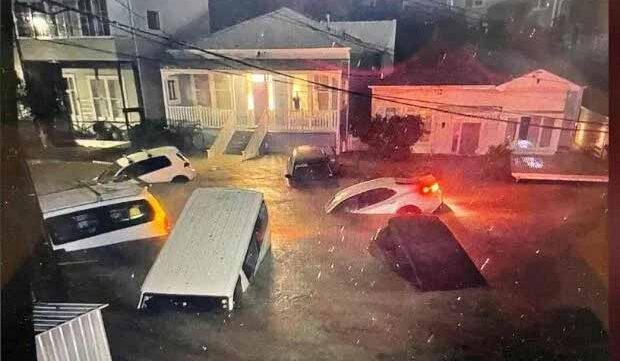
That point has been driven home again in Wellington. Last week’s flooding was severe enough that parts of the region saw more than 70mm of rain in an hour, with roads closed, slips across the city, and striking images of cars lifted and carried by floodwaters. Over the full 48-hour event, Wellington recorded rainfall totals close to three times the monthly average, and emergency services responded to more than 150 weather-related incidents.
For buyers, the key issue is not whether flood risk exists in theory. It is whether you understand the level of risk attached to the specific property you are considering, and whether the price, insurance cost, and long-term downside still make sense.
Why This Matters More In 2026
New Zealand has become much more transparent about natural hazard risk. Since 1 July 2025, councils have had updated legal obligations around natural hazard information in LIMs, and from 17 October 2025 new regulations standardised how natural hazard information, including flood risk, must be presented in LIM reports. That means buyers are now far more likely to see flood-related information clearly disclosed during due diligence.
That shift matters because flood exposure is not rare. Government reporting in 2025 found about 219,000 homes, worth roughly $180 billion, are located in coastal inundation and inland flood zones. Separate national flood modelling released in late 2025 estimated around 750,000 people, or 15 percent of the population, are already at risk from a major rainfall or river flooding event.
In short, buyers now have better information, but that also means there is less room to pretend the issue is minor or irrelevant.
What “Flood Zone” Actually Means For A Buyer
A flood-affected property is not automatically unfinanceable and it is not automatically a bad buy. Some properties are flagged for overland flow paths, some for ponding, some for major rainfall events, and some for more regular exposure. The severity matters.
When we review a purchase with clients, the practical questions are usually:
- Is the home itself likely to flood, or is the issue mainly land around it?
- Is there a history of actual flooding, or is it a mapped future risk?
- Can the property still be insured on acceptable terms?
- Will the bank require extra information or take a more cautious view?
- If you had to sell in five or ten years, would the buyer pool shrink?
Those are the questions that matter alongside the price and the weekly mortgage repayment. If you are at the start of the search, sorting your first home loans position first can help you move quickly on safer options and avoid wasting time on properties that look cheap for the wrong reason.
How Much Does Being In A Flood Zone Affect Property Value?
There is no single NZ-wide percentage discount. Flood risk affects property value differently depending on the type of risk, whether buyers can still get insurance comfortably, and how common the issue is in that suburb.
That said, current New Zealand flood-risk market guidance suggests:
- low-risk properties often see little to no value effect
- medium-risk properties may face modest pressure, often in the low single digits
- high-risk properties can face a noticeably smaller buyer pool and value reductions that move into the mid-single digits or low teens, depending on severity and insurability.
The reason is straightforward. Once a flood issue is visible on the LIM and a buyer knows insurance may cost more or come with higher excesses, that buyer either negotiates harder or walks away. In a balanced market like Wellington, that matters even more because buyers have time to be selective.
How Much More Is Insurance In A Flood Zone?
Again, there is no standard surcharge across New Zealand. Insurance is priced case by case, and the difference between “some extra risk” and “ongoing insurance pain” can be substantial.
Current NZ flood-risk guidance indicates:
- low-risk properties may see minimal premium change
- medium-risk homes can face increases from a few hundred dollars per year into the low thousands
- high-risk properties have, in many cases since late 2023, seen premium increases ranging from roughly $500 to $5,000 a year, with excesses often doubling or tripling.
That is why we would never recommend relying on a generic insurance estimate. Get an actual quote before going unconditional. A house that looks affordable on purchase price can feel very different once the annual insurance bill lands.
It is also worth understanding how cover works. If you have a standard house insurance policy that includes fire cover, you generally have access to Natural Hazards Commission cover, but for storm and flood events that cover applies to certain residential land rather than the house itself. The home building cover through NHC is generally capped at $300,000 plus GST, while storm and flood damage to the home itself is typically a private insurer question.
What Banks And Advisers Look At
Lenders are increasingly aware of hazard exposure. That does not mean every flood-flagged property is declined. It does mean the bank may want stronger evidence that the property is insurable and that the risk is understood.
In practical terms, that can mean:
- asking for a LIM early
- checking council flood mapping
- confirming insurance terms before finance is locked in
- being realistic about resale
This is where getting your home loans structure sorted early helps. If you are already close to the edge on servicing or deposit, a more complicated property can create unnecessary friction. The same applies if you are moving and weighing up whether this purchase will still be easy to refinance later. In that situation, a mortgage review can be worthwhile before you commit.
What We Would Tell A Buyer Right Now
If a house in a flood zone is otherwise appealing, do not reject it on the spot. But do slow down and test it properly.
We would suggest:
Get The LIM Early
With the 2025 changes, flood information is clearer and harder to miss than it used to be. Read it carefully and ask questions.
Check The Insurance Before You Fall In Love With The Property
Do not assume cover will be available on ordinary terms.
Look At The Street, Not Just The House
A home may sit slightly above the worst part of the risk, but access, garages, driveways, retaining walls, and surrounding land can still create real issues.
Think About Resale, Not Just Purchase
Today’s “we can live with it” can become tomorrow’s “why won’t this property move?”
Get Pre-Approval Sorted Before You Bid Emotionally
Our blog on mortgage pre-approval and why you should get one is a useful place to start if you want to be clear on your buying range before due diligence costs stack up.
Making The Right Call
In New Zealand, buying a house in a flood zone is not automatically the wrong decision. But it is rarely the sort of purchase where you want to wing it.
The recent Wellington floods were a visible reminder that heavy rainfall, saturated ground, and overwhelmed infrastructure are not abstract future concerns. They are current ones. A property can still be worth buying if the risk is understood, the insurance is workable, the price reflects reality, and the long-term downside has been thought through properly.
If you want help assessing how a riskier property fits with your finance position, your deposit, or your long-term plans, it is worth having that conversation before you go unconditional. You can review your options through first home loans, broader home loans support, or simply contact us and talk through the scenario properly.
Share this
Date
May 31, 2026